
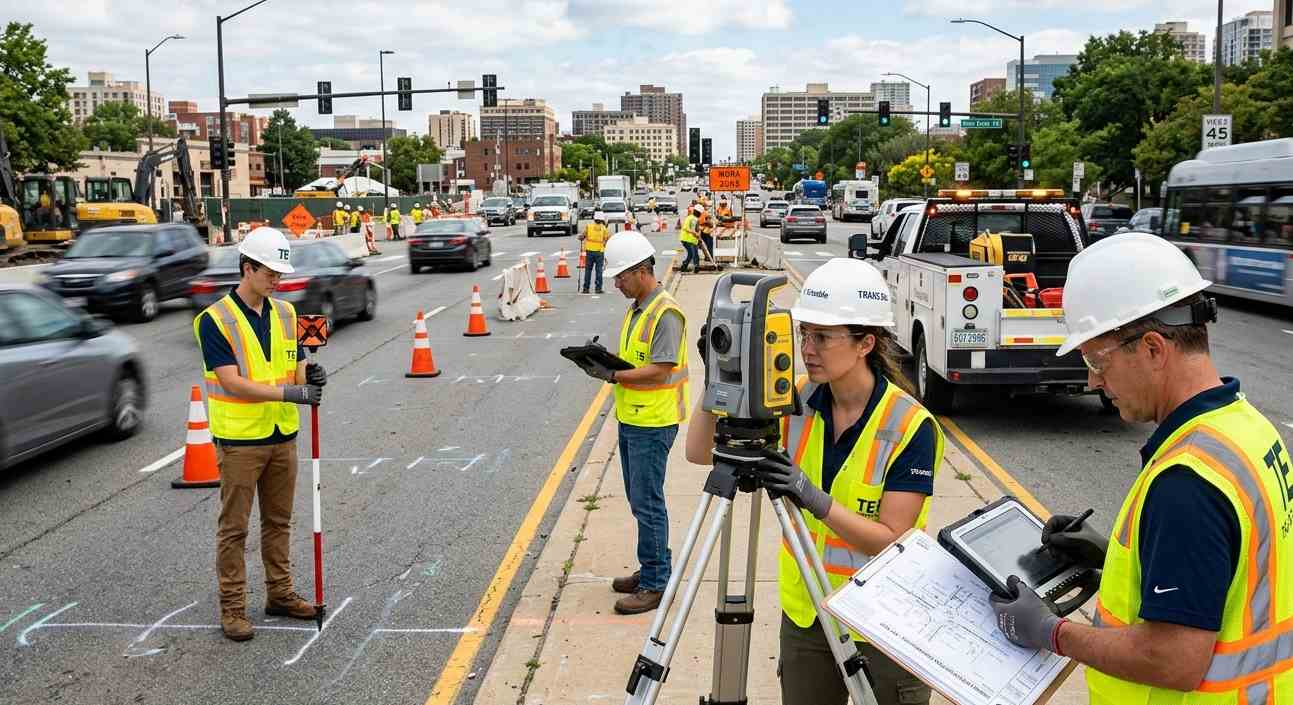
The roads, bridges, and transit systems that connect communities and enable economic activity are among the most consequential investments any society makes. They determine where people can live and work, how goods move through supply chains, and how resilient communities are in the face of natural events and population growth.
Behind every reliable piece of transportation infrastructure is a team of engineers whose expertise shapes both the immediate project and its decades of service life ahead.
The Invisible Complexity Behind Every Bridge and Road You Use
What appears to be a simple bridge or highway involves layers of engineering analysis that most users never see. Structural load calculations must account for live loads, dynamic forces, thermal expansion, seismic activity, and decades of accumulated fatigue. Geotechnical assessments determine how structures interact with the underlying soil and rock.
Hydraulic analyses ensure that drainage and waterway crossings perform correctly under extreme rainfall events. Each discipline contributes critical information that shapes the final design and construction approach.
Why Specialized Expertise Matters for Transportation and Bridge Projects
Transportation and bridge engineering is a distinct specialty within civil engineering that requires deep familiarity with current design standards, inspection protocols, and construction methods specific to these structures. General civil engineers may lack the focused experience needed to navigate the complex regulatory requirements, safety standards, and long-term performance considerations that transportation projects demand.
Engaging firms with proven specialization in transportation and bridge engineering services ensures that projects are designed and managed by professionals who understand the full scope of what these structures require.
The Critical Role of Inspection and Assessment in Maintaining Existing Infrastructure
Many of the most important transportation engineering challenges involve not the design of new structures but the assessment and rehabilitation of existing ones. Aging infrastructure requires systematic inspection to identify structural deficiencies before they develop into safety hazards.
Bridge inspection programs use visual assessment, non-destructive testing, and load rating analyses to establish the current capacity and remaining service life of structures. This data drives informed decisions about maintenance priorities, load restrictions, rehabilitation strategies, and the timing of replacement projects.
How Modern Engineering Technology Is Transforming Infrastructure Design
The tools available to transportation engineers have advanced significantly in recent decades. Building Information Modelling enables three-dimensional design coordination that identifies clashes and constructability issues long before ground is broken. LiDAR scanning provides precise topographic and structural data from existing conditions.
Advanced structural analysis software models complex dynamic loads with accuracy that was previously impossible. These technologies improve design quality, reduce construction risks, and enable more efficient use of public infrastructure investment.
Planning Infrastructure That Meets the Demands of Future Generations
Transportation infrastructure built today must serve communities for fifty years or more, through population changes, evolving vehicle types, changing climate conditions, and shifting land use patterns that cannot be fully anticipated at the design stage. The best engineering approaches incorporate flexibility, resilience, and appropriate margins for future adaptation.
Designing for maintenance accessibility, material durability, and structural adaptability ensures that infrastructure investments deliver value not just at ribbon-cutting but throughout their full intended service life.
Conclusion
Transportation infrastructure is the physical backbone of connected, thriving communities, and the quality of the engineering behind it determines whether it delivers on that promise. Experienced, specialized engineering professionals bring the technical depth and professional rigor that these vital projects demand, ensuring that the infrastructure built today serves its communities reliably for generations to come.